Did You Have to be a Parent to Your Siblings? Here are 3 Reminders Every Former Parentified Child Needs to Hear
About this Episode
Parentified child? Eldest daughter? Mature for her age? So many moms who struggle with boundaries, people-pleasing, and extreme mom guilt started out as good girls who were tasked with adult responsibilities from a young age, and then we continue to struggle to get out from under those responsibilities that should have never been ours to carry in the first place. In this episode, I share some of my personal journey of being a parentified child and getting my brother through a near-death crisis, in addition to 3 things you should know in order to heal, recover, and take up space in your own life.
Ready to start your No Longer Last Journey®? Pick your path below.
Free Guide: The 4B Self-Care Framework©
A great way to get started on your self-care journey, this guide provides an easy-to-use framework that makes self-care actually supportive rather than another burden on your to-do list. Get the Guide
Instant Access Workshop: Rituals that Replenish
This DIY 3-hour workshop (1 hour per week) will help you get to know your true wants and needs and will help you develop the habit of practicing one self-care ritual in your daily life. Learn More
Live Coaching Program: The No Longer Last Journey®
This 12-month program includes monthly coaching & community calls, classes & reflection guides, and weekly self-care reminders to help you overcome obstacles, improve your self-worth, and make self-care a sustainable and supportive part of your life. Learn More
Blog Post Version
This is for all the women who had to be a parent to their siblings.
Last week, I posted on my Instagram stories (@nolongerlast) about visiting my brother who I used to be a full-time caregiver for when I lived in California. Earlier this month, I traveled from Portugal to California for work, so I had the opportunity to visit him after 3-ish years apart. My brother, Michael, has autism and Crohn's disease (shared with his permission).
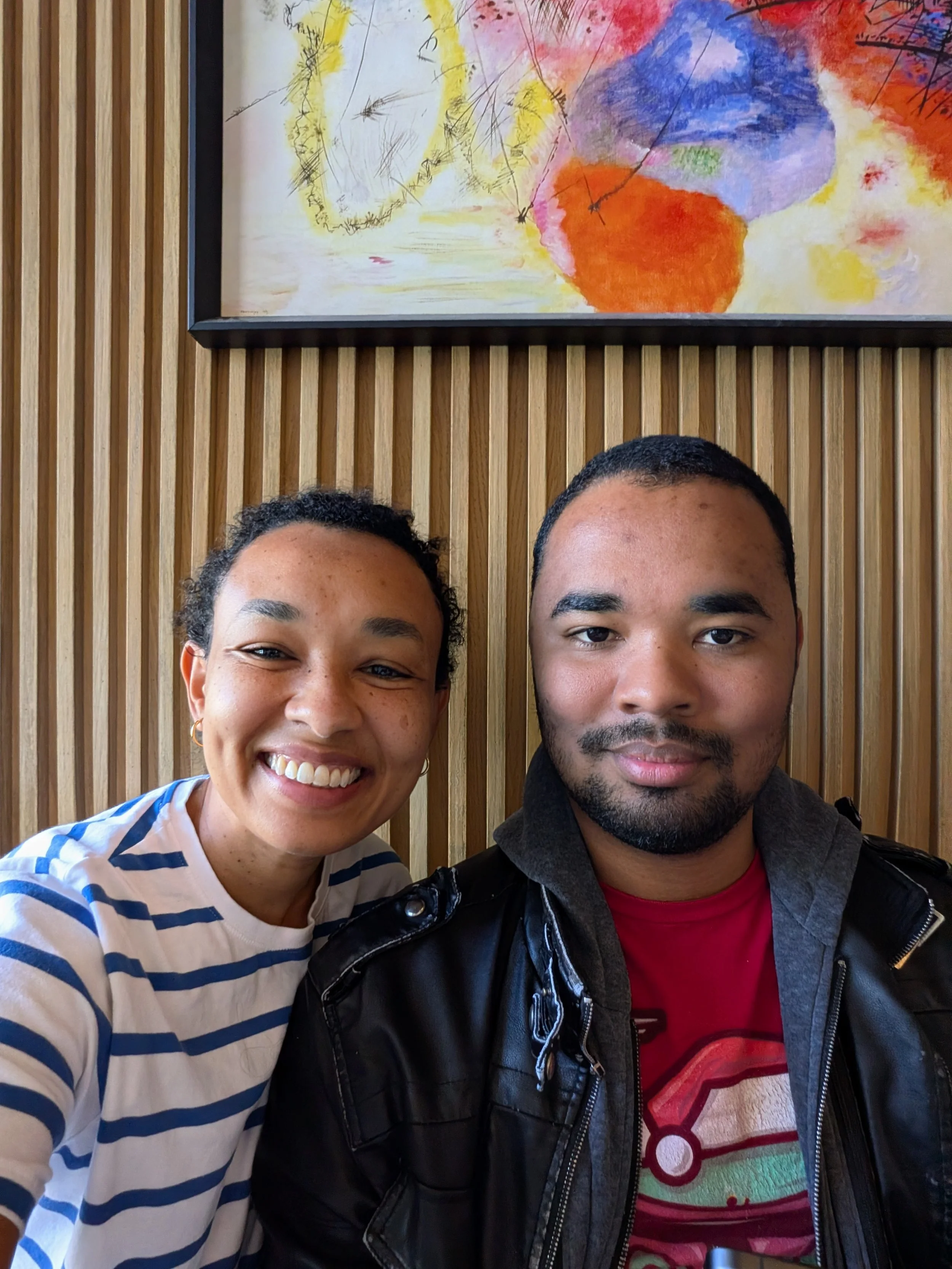
When he landed on my doorstep in 2017, his disease had progressed so much without treatment. When I got him into the emergency room and his test results were evaluated, the gastrointestinal doctor said that if Michael didn’t start treatment immediately his situation could be fatal within a few days or weeks.
My entire life was turned upside down trying to get my brother the care he needed. At this point, I was still breastfeeding my 10-month old baby, and I was working 30 hours a week from home. It was a crisis moment. My brother needed care, and he needed it right away. I didn’t have time to address the people who caused the years-long neglect Michael endured without my knowledge. (Michael lived in Guam. I lived in California).
I’m happy to say that my brother is finally stable and thriving. He’s receiving so many publicly-funded services through the state of California (one of the reasons why I work in public policy now), and he is working, making his own money, accessing free healthcare, and receiving educational support so that he can graduate from high school.
This is just one of dozens of stories I could tell you about how I was forced to step up and be a parent to my siblings. I thought that I was done with this role when I moved away from Guam to start my new life in California, but the role still followed me even though I was thousands of miles away. There is an actual term for this. It’s called being a Parentified Child. It’s when you are shouldered by adult responsibilities from a young age. This harms your development and your mental and physical health, and I am still healing from this to this day.
When Michael came to me needing help, I may not have been a child, but I was still that sibling who was programmed to step up and be a caregiver while the people who are actually responsible are failing their own children. And to be clear, I feel no resentment towards Michael or my other siblings I helped take care of. None of us asked for this, and we were doing our best with an impossible situation.
I really wanted to dedicate a letter to this topic because I know that many women in the No Longer Last community were parentified as children. We were the “eldest daughters.” The responsible ones. The ones everyone could count on and who no one cared what that would cost us.
Parentified children become adults who struggle to set and enforce boundaries, prioritize ourselves, and can’t turn off our caregiving mode. We learned to find our value and self-worth in helping others…even at the expense of our mental and physical health. As heavy and devastating as this is, healing is possible. I’ve experienced it, and I’ve seen my clients heal as well.
Finding my way to this version of me who sets boundaries and protects them fiercely; who prioritizes my needs with little to no guilt; and who feels okay not being helpful when it requires me to abandon myself has taken so much therapy, coaching, inner work, and practice. If you are yearning to become a version of yourself who can release the parentified, highly-capable, eldest daughter role, you need to know these 3 things:
1. You can love someone AND still respect your limits.
If loving someone requires you to abandon yourself — it’s not love.
It’s a ticking time bomb that’s going to explode, hurting you and everyone else around you. It’s not a matter of if, but when this will happen.
I’ve experienced it. And it’s a big part of why I eventually burned out, was hospitalized, and then spent a year setting my brother up with publicly-funded, professional services that gave him free access to registered nurses, social workers, home care managers, behavioral health therapists, and others who ultimately are caring for him so much more comprehensively and sustainably than I ever could have done alone.
Q for you: Where are you showing up for someone out of love but it's actually hurting you? How can you bring in more support and set more boundaries so that you can protect your well-being and stop abandoning yourself?
2. You can release the role forced on you as a child and build a new one.
Despite being forced into a role without your consent as a child, you are an adult now, and you can release that role and build a new one that honors who you are and what you need.
It won’t be easy to do this, and there will absolutely be people who will judge and shame you for doing this, but this is about your life — your health, your happiness, and your well-being. You don’t have to be the unpaid doormat of your family forever. You can be your own person, living your own life. Don’t let the bullies force you to continue living a life that requires you to abandon yourself.
Q for you: What is the worst and the best thing that could happen if you decide to change your role of chief, unpaid caregiver in your family? Allow your vision of the best thing that could happen to motivate you to take the hard steps of releasing this role. (Remember, you’re stronger than you think, and when you start prioritizing yourself, you’ll be even stronger).
3. Choosing yourself does not make you a bad person.
Part of why it’s so hard for women to choose ourselves is because being there for everyone else with zero boundaries or limits is tied up in our definition of what a “good” person is. So, to even think about not being there for others when they demand it to go and choose to fulfill our own wants and needs literally feels like we are doing something so morally wrong.
After going through my own healing journey for 10+ years, and coaching other moms through variations of this problem for the last 6 years, here’s what I know to be true: Taking care of yourself is not bad. It is actually the most responsible and good thing you can do.
You are your own keeper. And if you can’t show up for yourself, you can’t show up for anyone else. You are a good person, regardless of how useful, helpful, or valuable you are to other people. Your goodness is inherent. Your worth is unchanging, and nothing anyone does or says can change that.
Q for you: When you try to do nothing — like rest on the couch or watch TV — is it a struggle? Like, you’re not just antsy, but you feel kinda guilty? If the answer is yes, you are a victim of the conditioning that made you believe that not being useful means you’re doing something bad. Don’t worry, you can overcome this, it just takes time, support, and practice. Don’t give up.
***
Lastly, I just want to say I am sorry. I am sorry that you were forced into a very heavy role when you were supposed to just be a child. I am sorry that you were / are guilted into showing up beyond your limits by people who are supposed to love and support you. I am sorry that you are now having to deal with the physical and psychological repercussions of shouldering way more responsibilities than any human should ever carry.
I’m here to listen to your stories. Validate what you’ve gone through. And support you in your healing and recovery. Just reply to this email if you want to share. I get what you’ve been through and so many others do, too. You’re not alone.

Hi there, I’m Mia Hemstad!
I’m a mom, abuse survivor, self-care coach, and the founder of The No Longer Last Journey® — a movement to empower mothers to make their health, happiness, and well-being a priority. I’m also a maternal mental health policy advocate, and I live with PTSD.
I believe that every mom deserves to be a priority in her own life, and when she thrives, everyone thrives.
Check out more on the blog!